


Automated Storage Racking System
An Automated Storage Racking System combines storage racks with automated equipment and control systems to store, retrieve, and manage materials with less manual handling. It is particularly useful where storage density, inventory accuracy, and faster material movement are important.
We manufacture and supply Automated Storage Racking Systems for different warehouse storage and material-handling requirements. As an Automated Storage Racking System Manufacturer, Supplier and Service Provider, we also provide installation, commissioning, inspection, Automated Storage Racking System Spare Parts, Maintenance, Repair, and AMC support. We provide Automated Storage Racking System in Pune, Automated Storage Racking System in Kolhapur, Automated Storage Racking System in Navi Mumbai, and Automated Storage Racking System in Chennai. The system can be integrated with Stacker Cranes, conveyors, Warehouse Management Systems, sensors, barcode systems, PLC controls, automated guided systems, safety equipment, and other warehouse automation solutions according to the application.
How an Automated Storage Racking System Works
An Automated Storage Racking System uses automated storage and retrieval equipment to place materials in designated rack locations and retrieve them when required. Control or warehouse management software can coordinate storage locations and material movement.
Typical components include:
- Storage racks
- Automated storage and retrieval equipment
- Conveyors
- Pallet handling equipment
- Sensors and safety systems
- Barcode and identification systems
- Warehouse control or management software
- Control panels and automation components
Benefits of an Automated Storage Racking System
- Better warehouse space utilisation: Vertical storage can increase storage capacity.
- Reduced manual handling: Automated movement reduces repetitive handling activities.
- Improved inventory accuracy: Automated location tracking can help minimise storage and retrieval errors.
- Faster material retrieval: Automated equipment can locate and move materials efficiently.
- Better workflow: Integration with warehouse operations can organise material movement.
- Reduced picking errors: Automated identification and location management can improve accuracy.
- Improved workplace safety: Reduced movement of people and equipment through storage aisles can improve warehouse organisation.
Applications
An Automated Storage Racking System can be used in:
- Warehouses
- Manufacturing facilities
- Distribution centres
- Spare-parts stores
- Cold-storage facilities
- Industrial inventory operations
The appropriate configuration depends on whether the facility stores pallets, cartons, containers, components, finished goods, or other inventory.
Important Factors Before Installation
Choosing an Automated Storage Racking System should begin with a detailed assessment of the warehouse and operating requirements.
- Available floor area and building height
- Required storage capacity
- Maximum load per storage position
- Pallet or container dimensions
- Storage and retrieval frequency
- Required system throughput
- Product weight and characteristics
- Fire and safety requirements
- Existing warehouse software and equipment
- Future expansion requirements
A proper assessment helps ensure the system is suitable for the actual storage capacity, material flow, and operating requirements.
Maintenance and Service
Regular inspection and maintenance are important because an Automated Storage Racking System combines mechanical, electrical, structural, and automation components.
- Preventive maintenance
- Sensor inspection
- Conveyor maintenance
- Control-system troubleshooting
- Spare-parts availability
- Technical and software support
- Periodic safety inspections
Regular servicing can help identify wear, sensor problems, conveyor issues, control faults, and other potential failures before they affect warehouse operations.
Selecting an Automated Storage Racking System
The best system is not necessarily the most automated or expensive option. It should provide the required storage density, operational performance, reliability, and maintainability while allowing for future expansion.
A reliable Automated Storage Racking System should be planned around:
- Current storage requirements
- Expected inventory growth
- Product characteristics
- Material flow
- Required throughput
- Available warehouse space
Proper design, installation, commissioning, operator training, and ongoing maintenance are important for achieving reliable long-term system performance.
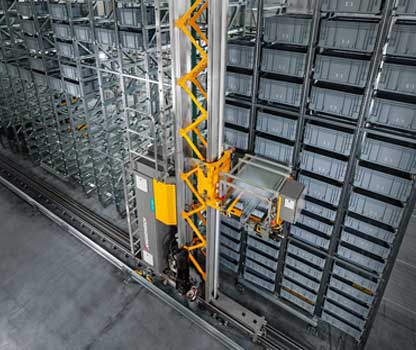


Applications of Automated Storage Racking Systems
Automated Storage Racking Systems are used in a wide range of warehouse and industrial applications where materials need to be stored, retrieved, organized and managed efficiently.
Common applications include:
- Automated Storage and Retrieval Systems: Automated Storage Racking Systems help organize and automate the storage and retrieval of goods from designated storage locations.
- High-Bay Warehouses: These systems utilize vertical warehouse space efficiently and support organized storage at greater heights.
- Logistics and Distribution Centres: They assist in systematic storage, retrieval and movement of goods to improve warehouse material flow.
- E-Commerce Fulfillment Centres: Automated racking systems support efficient inventory storage and retrieval for faster order processing.
- Manufacturing and Automobile Component Warehouses: They help store and manage raw materials, components, finished products and automobile parts.
- Spare Parts and Pharmaceutical Warehouses: These systems provide organized storage and controlled retrieval of spare parts, components and pharmaceutical products.
- Cold Storage and Food & Beverage Facilities: Automated Storage Racking Systems support efficient utilization of temperature-controlled storage areas and organized handling of stored products.
- FMCG Warehouses: They assist in high-density storage, inventory organization and efficient retrieval of fast-moving consumer goods.
Why Choose an Automated Storage Racking System?
Automated Storage Racking Systems are useful where businesses require high-density storage, efficient inventory movement and better utilization of available warehouse space. Some of the main benefits include:
- High-Density Storage: Maximizes the use of available floor and vertical warehouse space for efficient storage.
- Automated Storage and Retrieval: Helps automate the movement of pallets, cartons, containers and other stored materials.
- Better Space Utilization: High-rise rack configurations can reduce the floor area required for storage and improve warehouse capacity.
- Improved Inventory Control: Automated systems can support organized storage, retrieval, tracking and inventory management.
- Reduced Manual Handling: Automation can reduce dependence on manual material movement inside the storage area.
- Faster Material Movement: Automated retrieval and storage can improve the speed and efficiency of warehouse operations.
- Customizable Configuration: Rack height, load capacity, aisle width, storage levels, pallet dimensions and automation requirements can be selected according to the application.
- Integration with Automation Systems: The racking system can be integrated with Stacker Cranes, conveyors, WMS, PLCs, sensors, barcode systems and other warehouse automation equipment.
- Suitable for Different Industries: Automated racking can be used in logistics, manufacturing, e-commerce, pharmaceutical, automobile, FMCG and cold-storage applications.
- Complete Service Support: Professional Automated Storage Racking System Manufacturers and Suppliers can provide Automated Storage Racking System Spare Parts, Maintenance, Repair, Inspection, Servicing and AMC services.
FAQ’s
An Automated Storage Racking System is a high-density warehouse storage solution designed to automate the storage and retrieval of pallets, cartons, containers, components and other materials using suitable automated material-handling equipment and control systems.
They are commonly used in logistics warehouses, distribution centres, manufacturing facilities, e-commerce warehouses, pharmaceutical storage, cold storage, automobile component warehouses, FMCG warehouses and other high-density storage applications.
Selection depends on storage capacity, load weight, pallet or container dimensions, rack height, storage levels, aisle width, warehouse layout, material flow, operating frequency, automation requirements and future storage needs.
Yes. The system can be customized according to rack height, load capacity, storage levels, pallet dimensions, aisle width, warehouse layout, Stacker Crane configuration, conveyor arrangement, control system and specific application requirements.
Yes. Automated Storage Racking System Spare Parts can be supplied for rack components, rollers, wheels, bearings, sensors, switches, conveyor components, Stacker Crane components, electrical panels, control components, safety systems and other associated equipment.
Yes. We provide Automated Storage Racking System Maintenance and Repair services for mechanical, electrical, structural, automation, conveyor, Stacker Crane, sensor and control-system requirements. Regular preventive maintenance can help maintain reliable warehouse operations.
Automated Storage Racking System AMC is an Annual Maintenance Contract that provides scheduled inspection, preventive maintenance, servicing, troubleshooting, Spare Parts support and breakdown assistance for the storage and associated automation systems.
Yes. Automated Storage Racking Systems can be integrated with Stacker Cranes, conveyors, Warehouse Management Systems, PLC controls, sensors, barcode systems and other automated material-handling equipment according to the warehouse configuration.
Yes. We provide Automated Storage Racking System in Pune, Automated Storage Racking System in Kolhapur, Automated Storage Racking System in Navi Mumbai and Automated Storage Racking System in Chennai, along with manufacturing, supply, installation, commissioning, Spare Parts, Maintenance, Repair, Inspection, Servicing and AMC support, subject to project and service requirements.